Sintu Kumar
How to Get Airdrops: A Complete Beginner’s Guide to Finding and Receiving Crypto Airdrops
Introduction
Cryptocurrency airdrops have become a popular topic in the blockchain industry. Many people explore airdrops to learn about new blockchain projects, discover decentralized applications, and understand how digital tokens are distributed. However, not every airdrop is genuine, and receiving tokens is never guaranteed.
If you are researching how to get airdrops, the first step is to understand what an airdrop is, how projects distribute tokens, and what you need to do to participate safely. Some projects distribute tokens to eligible wallet addresses, while others organize educational campaigns, community activities, or rewards for users who meet specific requirements.
At askcryptobonus.com, our goal is to make cryptocurrency concepts easier to understand. This guide explains the different types of airdrops, how to find legitimate opportunities, how to receive tokens, and how to avoid common scams.
Whether you are completely new to cryptocurrency or simply want to understand the airdrop process, this article will help you build a practical foundation without assuming that every campaign offers free money.
What Is a Cryptocurrency Airdrop?
A cryptocurrency airdrop is a distribution of digital tokens to selected blockchain wallet addresses. A project may distribute tokens to introduce a new cryptocurrency, reward eligible community members, encourage people to explore its application, or decentralize token ownership.
Airdrops can work in different ways. Some projects distribute tokens automatically to eligible addresses. Others require users to complete an official claim process. Certain campaigns distribute non-transferable points or badges rather than cryptocurrency with immediate monetary value.
For example, a blockchain project might announce that eligible users who interacted with its application before a particular date can claim a token allocation. Another project might organize a testnet campaign to help participants learn how a blockchain works before its main network launches.
It is important to understand that an airdrop does not automatically mean profit. Tokens may have no market value, may not be transferable, or may never be distributed. Some projects also have geographic restrictions and eligibility conditions.
Before participating, read the project’s official announcement, understand its terms, and check whether participation is permitted in your location.
How to Get Airdrops: Start With the Basics
Learning how to get airdrops begins with preparation rather than rushing to join every campaign advertised on social media. A careful process can help you identify relevant opportunities while reducing exposure to fraudulent websites.
-
Learn About Different Types of Airdrops
Before participating, understand the major categories of airdrops.
Standard airdrops: Projects distribute tokens to a defined group of eligible wallet addresses. Eligibility may depend on a snapshot, registration, or other published criteria.
Holder airdrops: Some projects distribute tokens to people who held a particular eligible asset at a specified time. The project’s rules determine which wallets qualify.
Retroactive airdrops: A project may reward qualifying users for activity completed before the reward announcement. Previous participation does not guarantee that an airdrop will happen.
Testnet campaigns: Developers sometimes invite participants to test blockchain applications and report problems. A campaign may provide points or other recognition, but rewards are not guaranteed.
Educational campaigns: Some platforms offer learning activities, quizzes, or community tasks. Participants may receive badges, points, or tokens if the campaign explicitly includes those rewards.
Community campaigns: Projects may recognize community contributions, such as helpful documentation, translation, or technical feedback. Requirements differ between projects.
Understanding these categories helps you evaluate whether an opportunity matches your interests, available time, and comfort with blockchain technology.
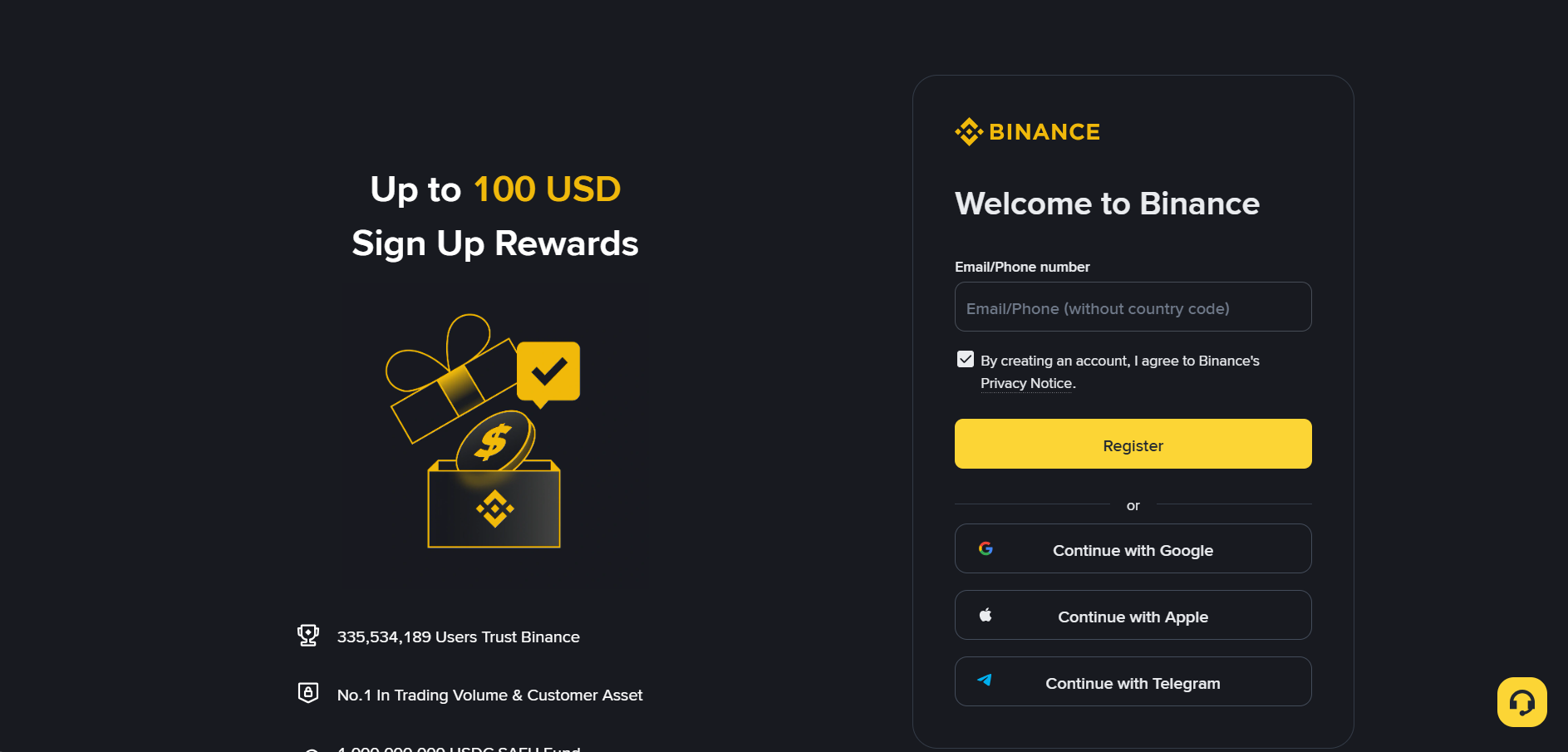
Binance : How to Get Airdrops
-
Create a Separate Wallet for Learning
A cryptocurrency wallet lets you interact with supported blockchain networks and manage digital assets. For educational purposes, consider using a separate wallet rather than connecting your primary wallet to unfamiliar applications.
Choose wallet software from its official website or a verified app store listing. Confirm that it supports the blockchain you intend to explore.
A separate wallet can help you organize activity and limit the assets exposed to an unfamiliar application. However, it does not make malicious transactions safe. A wallet can still be compromised if you approve harmful permissions, disclose recovery information, or sign a deceptive transaction.
Never share your recovery phrase or private keys with an airdrop website, social media account, or person claiming to be support staff. Legitimate token distributions should not require you to reveal these secrets.
Coinswitch : How to Get Airdrops
-
Research Projects Before Participating
Research is an essential part of finding legitimate campaigns. Look for an official project website, documentation, a clear description of the product, and published token distribution information.
Check whether the project explains its purpose, development progress, eligibility requirements, and any associated costs. Review announcements through official channels rather than relying entirely on screenshots or forwarded messages.
Be careful with claims such as guaranteed rewards, exclusive access available for only a few minutes, or unusually large token allocations for simple tasks.
If you cannot independently verify a campaign, skip it. Missing one opportunity is generally preferable to exposing your wallet or personal information to a fraudulent scheme.
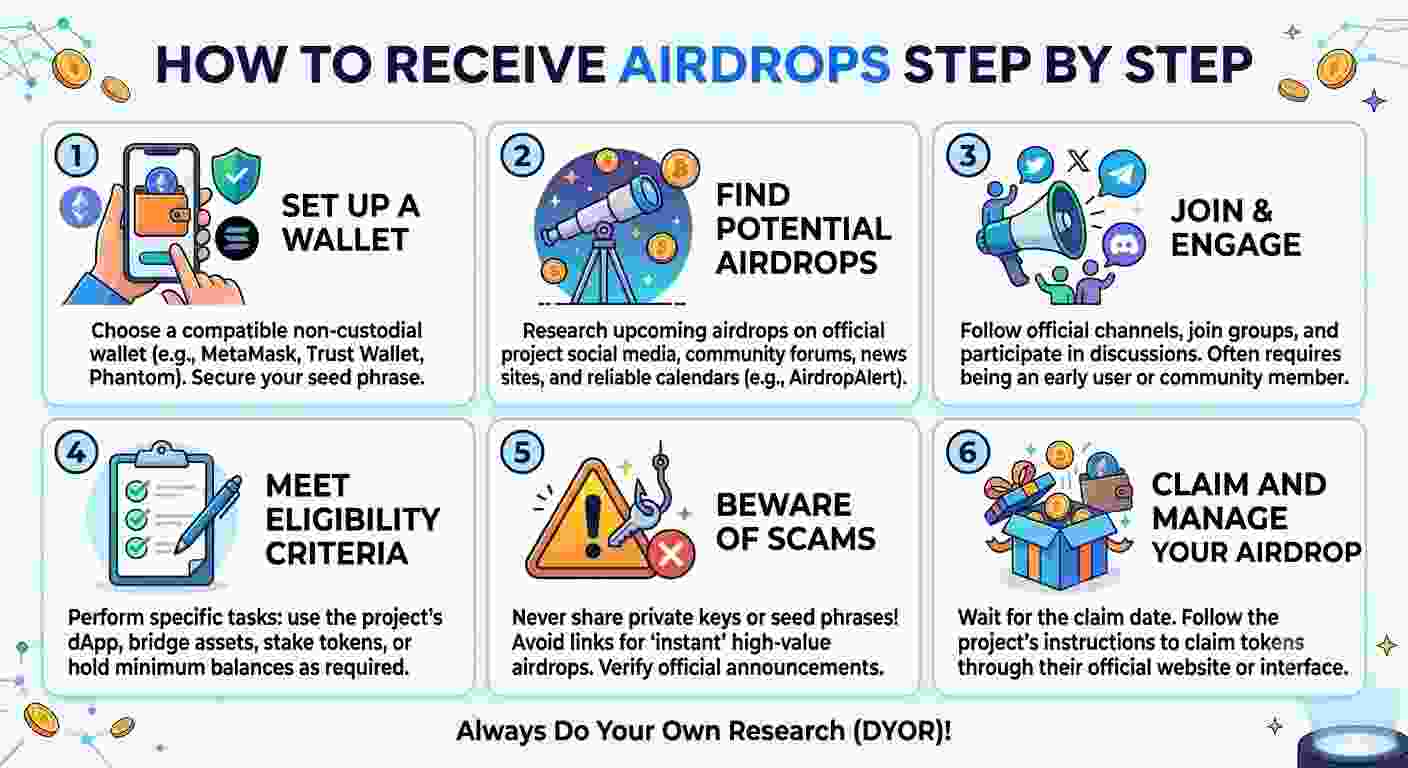
How to Receive Airdrops Step by Step
Understanding how to receive airdrops requires knowing how projects establish eligibility and deliver tokens. The exact procedure depends on the project’s design, blockchain, and published rules.
Step 1: Find an Official Announcement
Start with the project’s official website and verified communication channels. Read the complete announcement rather than relying on a promotional post.
Confirm whether the project is conducting an active campaign, distributing tokens, or merely discussing a possible future reward. These situations are not the same.
A project that has announced a token launch has not necessarily promised an airdrop. Likewise, a points program does not guarantee that its points will eventually become cryptocurrency.
Step 2: Read the Eligibility Requirements
Eligibility conditions can include a snapshot date, supported blockchain, minimum activity requirements, account verification, location restrictions, or other criteria.
Some distributions are automatic, while others require a claim during a specific period. Certain projects exclude particular jurisdictions or categories of participants.
Read the terms carefully and avoid assuming that completing one task makes you eligible. If the requirements are unclear, consult the project’s official documentation or verified support channel.
Step 3: Check Wallet Compatibility
Different blockchains use different wallet formats and networks. A wallet that supports one blockchain may not support another.
Before interacting with a campaign, verify that the wallet and network are supported. Make sure you understand which network the project uses and how its tokens will appear in your wallet.
Do not send assets to an address simply because a stranger claims it is required for eligibility. Check every transaction and address independently.
Step 4: Complete Only Necessary Tasks
Some projects require eligible users to register, complete an educational activity, test an application, or submit a claim. Others distribute tokens without requiring any action.
Follow the official instructions and provide only the information genuinely needed. Be cautious if a campaign requests unnecessary identity documents, passwords, wallet recovery phrases, or unrelated personal details.
If a task requires interacting with a blockchain application, understand what the transaction does before approving it. Transactions may be irreversible, and network fees may apply.
Step 5: Verify the Distribution
Once the project announces a distribution, check the official claim page or published eligibility information. If tokens are distributed automatically, verify the result using the appropriate blockchain explorer.
A blockchain explorer can show transactions and token movements on supported public networks. Confirm that the token contract address matches the project’s official documentation.
Do not trust a token simply because it appears in your wallet. Scammers can send unsolicited tokens containing misleading names, suspicious links, or instructions designed to trick recipients.
Step 6: Keep Records
Maintain a simple record of the projects you researched, dates of participation, official announcements, and any fees paid.
This helps you distinguish confirmed distributions from speculative campaigns and makes it easier to review your activity later.
Avoid sharing wallet addresses alongside personal information unnecessarily. Public blockchain transactions may remain visible even when your identity is not directly displayed.
How Do You Get Airdrop Opportunities?
People searching for how do you get airdrop opportunities often encounter advertisements, influencer posts, community announcements, and cryptocurrency news websites. The challenge is determining which information is reliable.
Follow Official Project Channels
Official project websites and verified announcements are usually the best starting points. Look for detailed eligibility rules and links that match the project’s established domain.
Verification badges alone are not conclusive proof of authenticity. Accounts can be impersonated, and legitimate accounts can sometimes be compromised. Confirm important announcements through more than one official source when possible.
Explore Blockchain Ecosystems
Different blockchain ecosystems have their own applications, developer communities, and token distribution policies.
You can learn about an ecosystem by reading its official documentation, exploring educational resources, and observing announcements from applications built on it.
Some projects may reward previous activity, while others may never distribute tokens. Explore applications because you want to understand their technology, not because you assume that activity will lead to a future reward.
Use Cryptocurrency News and Research Websites
Cryptocurrency news sites can help you discover announcements and understand project developments. However, articles may contain outdated information, speculation, sponsored promotions, or unconfirmed rumors.
Compare any opportunity with the project’s primary documentation. Check publication dates and distinguish between an announced campaign and a prediction about a possible future distribution.
At askcryptobonus.com, readers should approach airdrop information as a starting point for research rather than a guarantee of eligibility or payment.
Participate in Educational Communities
Some blockchain communities publish tutorials, documentation, and discussions that help newcomers understand their ecosystems.
Educational participation can be valuable even if no tokens are distributed. Ask questions, read the community guidelines, and avoid sharing sensitive wallet information in public channels.
Do not pay an unofficial administrator for access to a supposed private airdrop list. Community membership should not require handing over your recovery phrase or granting strangers control of your wallet.
How Do I Get Airdrop Rewards Safely?
If you are asking how do I get airdrop rewards without unnecessary risk, focus on verification, wallet security, and realistic expectations.
Understand the Difference Between Points and Tokens
Many projects use points to measure participation. These points may help determine eligibility for future benefits, but they are not necessarily cryptocurrency.
A project may change its reward policy, introduce new eligibility rules, or decide not to distribute tokens. Never assume that points have a guaranteed conversion rate or monetary value.
Read the terms of any points program and avoid paying money to acquire points solely because someone predicts a future token launch.
Check Whether a Claim Is Official
Fake claim pages often imitate real project websites. They may use similar domain names, copied logos, or messages suggesting that rewards will disappear unless you act immediately.
Navigate to a project through a verified source rather than clicking an unsolicited message. Check the full domain carefully, including spelling and unusual characters.
If an official announcement does not mention the claim, do not connect your wallet until you can verify the campaign independently.
Review Transaction Requests
A website may ask you to connect a wallet, but connecting and approving a transaction are different actions. A signature can authorize different operations depending on what is being signed.
Read wallet prompts carefully. Do not approve an unfamiliar transaction simply because the website labels it as an airdrop claim.
If the transaction’s meaning is unclear, stop and seek an explanation from reliable documentation. Never rely on a stranger who pressures you to approve it quickly.
Be Suspicious of Upfront Payments
Some legitimate blockchain interactions involve network fees. However, a demand to send cryptocurrency to an individual or unknown address to unlock a promised reward is a major warning sign.
A request for a deposit, tax payment, verification fee, or refundable security payment should be independently investigated. Scammers frequently use such claims to collect money from people expecting free tokens.
Do not send funds merely because a website displays a large reward balance.
Protect Your Recovery Phrase
Your wallet recovery phrase provides access to your wallet. Anyone who obtains it may be able to control the associated assets.
Never enter the phrase into an airdrop claim page, share it through a direct message, or send it to someone claiming to be technical support.
If a website requests your recovery phrase to verify eligibility, leave the website immediately.
How to Get Airdrop: Common Eligibility Methods
There is no universal eligibility rule for cryptocurrency airdrops. Each project determines its own criteria, and some projects never distribute tokens.
The following methods are common examples of how projects may assess participation.
Historical Wallet Activity
A project may consider blockchain activity completed before a snapshot date. The snapshot records relevant information about eligible wallets at a specified point in time.
Depending on the project’s rules, the assessment may involve ownership, prior application use, or other on-chain activity.
A snapshot does not guarantee that every active wallet will qualify. Projects can exclude certain transactions, regions, or wallet categories.
Product Testing and Feedback
Developers sometimes invite users to test applications, identify bugs, or provide feedback. These campaigns can help improve products before a wider release.
Read the campaign rules and use test networks where appropriate. Do not use money you cannot afford to lose or assume that testing will result in a token allocation.
Community Contributions
Some projects recognize useful contributions such as translating documentation, creating educational materials, or helping other community members understand a product.
Follow the project’s guidelines and produce original work. Avoid spam, fake accounts, copied content, and artificial engagement.
Meaningful participation is more useful than repeatedly completing low-quality tasks that offer no clear value.
Learning Activities
Educational campaigns may ask participants to read lessons, watch demonstrations, or complete quizzes.
These activities can provide a useful introduction to blockchain concepts. Before participating, confirm whether the reward is a token, a badge, points, or simply a completion certificate.
Do not provide sensitive information just to complete a quiz.
How to Get Airdrop Opportunities Without Falling for Scams
The phrase how to get airdrop appears in many online promotions, but scammers often exploit people’s interest in free cryptocurrency. Learning to identify suspicious patterns is just as important as learning how distributions work.
Warning Signs to Watch For
Be cautious when an offer includes any of the following:
- Guaranteed profits or a guaranteed token price.
- Requests for your private keys or recovery phrase.
- Pressure to act immediately without time to verify details.
- Unsolicited direct messages promising exclusive allocations.
- Websites with misspelled domains or copied branding.
- Demands to transfer cryptocurrency to unlock a reward.
- Requests to install unknown software or browser extensions.
- Fake testimonials or unverifiable claims about previous payouts.
- Unclear eligibility rules or missing official documentation.
One warning sign does not necessarily prove every detail of a campaign is fraudulent, but it is a reason to pause and investigate.
Verify Token Contracts
When a project publishes a token contract address, compare it with the address listed in its official documentation.
Multiple tokens can have similar names or symbols. A familiar name in your wallet does not prove that the asset is genuine.
Use a blockchain explorer appropriate to the relevant network. If you cannot verify the contract, avoid interacting with the token or following links embedded in its description.
Understand Wallet Permissions
Some blockchain applications request permission to interact with assets in your wallet. Depending on the network and transaction, an approval can expose assets to risks if it grants excessive permissions or interacts with malicious contracts.
Review permissions and revoke unnecessary approvals using reputable tools when appropriate. Revoking an approval may require a network fee, and it does not reverse a transaction that has already occurred.
Use caution with tools claiming to identify or remove every wallet threat. No security tool can guarantee complete protection.
Avoid Fake Customer Support
Scammers sometimes impersonate project moderators, wallet providers, or customer support representatives.
Never send recovery information to someone who contacts you unexpectedly. Use official help documentation and support channels that you independently locate.
A genuine support representative should not need your private keys to investigate an airdrop eligibility question.
Are Crypto Airdrops Really Free?
Airdrops are often described as free tokens, but participation can involve costs and risks.
For example, a blockchain transaction may require a network fee. Some campaigns require time spent learning an application or completing tasks. Others may request personal information, which introduces privacy considerations.
There is also a difference between receiving tokens and receiving something with a reliable market value. A token may have limited liquidity, restrictions on transfer, or no available market.
The price of a token can change significantly. Even when a project distributes tokens without charging participants, the resulting assets are not guaranteed to be valuable.
A careful participant considers these limitations before joining a campaign. Never borrow money or spend essential funds because you expect an airdrop to produce a return.
For beginners, learning how wallets, networks, transactions, and blockchain explorers work can be a more dependable educational benefit than chasing an uncertain reward.
Tools That Can Help You Research Airdrops
Several categories of tools can help you evaluate opportunities. Choose tools based on their purpose, reputation, and security practices rather than relying on a single website.
Official Project Documentation
Documentation explains a project’s technology, token policies, supported networks, and campaign requirements.
It is especially useful for checking eligibility rules and determining whether a token distribution has actually been announced.
Blockchain Explorers
Blockchain explorers let you inspect public transactions, wallet activity, and token contract information on supported networks.
They can help you verify whether a distribution occurred, but they cannot independently guarantee that a project is trustworthy or that a token will have value.
Wallet Security Features
Established wallet applications may provide transaction previews, network information, and warnings about certain suspicious interactions.
These features can reduce some risks but cannot detect every malicious contract or deceptive website.
Reputable News and Research Sources
Research websites can provide background on projects, token announcements, and ecosystem developments.
Use them to discover information, then verify important claims against official project documentation.
Askcryptobonus.com can serve as an educational starting point for readers who want to understand cryptocurrency rewards, token distributions, and the security considerations associated with blockchain activities.
Common Mistakes Beginners Should Avoid
People researching how to receive airdrops sometimes focus entirely on potential rewards and overlook the conditions attached to a campaign.
Avoid these common mistakes:
Joining every campaign: More participation does not necessarily mean better results. Research each project before interacting with it.
Assuming rewards are guaranteed: A project may change its plans or never distribute tokens.
Ignoring transaction details: Approving a transaction without understanding it can expose assets to risk.
Using the wrong network: Sending tokens or assets through an unsupported network can create complications or permanent losses.
Trusting social media screenshots: Screenshots can be fabricated. Confirm claims using official announcements and public blockchain data.
Sharing private information: Recovery phrases and private keys should remain confidential.
Paying to unlock rewards: An upfront payment requested by an unknown party is a serious warning sign.
Ignoring local rules: Cryptocurrency and promotional campaign requirements differ by jurisdiction. Check applicable laws and project restrictions.
Confusing token balances with cash: A wallet balance does not necessarily represent money that can be sold or withdrawn.
Overlooking privacy: Public blockchain activity can be analyzed, and some campaigns request personal information. Consider the implications before participating.
Avoiding these mistakes will not guarantee that you receive tokens, but it can help you make more informed decisions.
How to Keep Track of Airdrop Opportunities
A simple research checklist can help you manage campaigns without becoming overwhelmed.
Start by recording the project’s name, official website, announcement date, eligibility conditions, supported network, and any relevant deadline.
Next, record whether the project has confirmed a distribution or merely discussed a possible future reward. Keep notes about the source of the information and whether the claim has been independently verified.
If a campaign involves a wallet transaction, record its purpose and review the details before approving it. Avoid storing private keys or recovery phrases in spreadsheets, notes, or online documents.
Review your list periodically and remove expired or unverifiable opportunities. Do not continue using a website simply because you previously interacted with it.
This approach can make airdrop research more organized while helping you distinguish confirmed facts from speculation.
Is Getting Airdrops Suitable for Beginners?
Beginners can learn about airdrops, but they should first understand basic cryptocurrency security and the limitations of token distributions.
Learn how public and private keys work, what a blockchain transaction does, and why some transactions cannot be reversed. Understand the difference between a testnet and a mainnet, and learn how to verify a token contract.
It is also useful to recognize that a wallet address is not the same as a recovery phrase. Sharing a public address may allow others to view its activity, while exposing the recovery phrase can give someone control over the wallet.
Start with educational resources and read project documentation before participating in unfamiliar applications. Avoid campaigns that pressure you to spend money, disclose sensitive information, or act without understanding the risks.
If you are under the legal age for a particular financial service, follow the service’s eligibility rules and seek appropriate adult guidance. Never misrepresent your age to access a restricted platform.
Conclusion
Learning how to get airdrops involves much more than finding a website that promises free tokens. You need to understand the different types of distributions, verify project announcements, check eligibility requirements, use compatible wallets, and protect your sensitive information.
The process of how to receive airdrops varies from one project to another. Some distributions happen automatically, while others require an official claim or participation in a defined campaign. Neither participation nor eligibility guarantees that tokens will be distributed or have monetary value.
If you are wondering how do you get airdrop opportunities, start by researching official project channels and understanding the underlying technology. If your question is how do i get airdrop rewards safely, prioritize security and avoid offers that require private keys, recovery phrases, or suspicious upfront payments.
Ultimately, how to get airdrop opportunities is a question best approached with patience, research, and realistic expectations.
Visit askcryptobonus.com for educational information about cryptocurrency concepts, blockchain technology, and digital reward programs. Always verify important details independently and remember that protecting your wallet and personal information matters more than chasing an uncertain reward.
Frequently Asked Questions (FAQ)
-
How to get airdrops for beginners?
Start by learning how cryptocurrency wallets and blockchain networks work. Research official project announcements, understand eligibility requirements, and check whether a campaign is legitimate before participating. Never share your recovery phrase or private keys.
-
How to receive airdrops in a crypto wallet?
The process depends on the project. Some tokens are distributed automatically to eligible addresses, while others require a claim through an official website. Confirm wallet compatibility, verify the token contract, and review every transaction before approving it.
-
How do you get airdrop tokens without paying?
Some projects distribute tokens without charging a participation fee. However, certain blockchain activities involve network fees, and no reward is guaranteed. Avoid sending cryptocurrency to unknown individuals or paying suspicious fees to unlock a promised distribution.
-
How do i get airdrop rewards safely?
Use a separate wallet for unfamiliar applications, verify official announcements, check eligibility rules, and carefully review transaction requests. Never disclose recovery phrases or private keys. Avoid urgent offers that promise guaranteed profits.
-
How to get airdrop opportunities from legitimate projects?
Research the project’s official website, documentation, and verified communication channels. Compare announcements across reliable sources and look for clear eligibility requirements. Be cautious of impersonation accounts and unofficial claim websites.
-
Do all cryptocurrency projects offer airdrops?
No. Many cryptocurrency projects never conduct airdrops. Others may distribute tokens only to specific users or under particular conditions. Never assume that using an application will automatically qualify you for a future reward.
-
Are airdrops guaranteed to make money?
No. Tokens may have no market value, limited liquidity, or restrictions on transfers. Their prices can change significantly, and a project may not distribute the promised rewards. Treat airdrops as uncertain distributions rather than guaranteed income.
-
Do I need a cryptocurrency wallet to receive airdrops?
Many blockchain airdrops require a compatible wallet address, but some educational programs distribute points, badges, or other rewards through an account. Follow the official campaign rules and avoid creating a wallet through an unverified website.
-
Why have I not received my airdrop?
Possible reasons include unmet eligibility requirements, an incorrect or unsupported wallet address, a delayed distribution, an expired claim period, or a project changing its plans. Check official announcements and published eligibility information before taking further action.
-
Can airdrop websites steal cryptocurrency?
Fraudulent websites may try to obtain recovery phrases, trick users into approving malicious transactions, or persuade them to send funds. Verify website domains, review transaction details, and never share confidential wallet credentials.
-
Are airdrop points the same as cryptocurrency?
No. Points generally represent participation or progress within a project. They do not automatically have monetary value and may never convert into tokens. Read the project’s published terms before assuming that points will lead to a reward.
-
Where can I learn more about cryptocurrency airdrops?
Read official blockchain documentation, research verified project announcements, and use reputable educational resources. Askcryptobonus.com can help readers understand cryptocurrency terminology and reward programs, but important eligibility and security details should always be confirmed through official sources.
SEO publishing note: Keep the five target keywords in relevant headings and body paragraphs, but do not force every phrase into every section. A natural article is more useful to readers than repetitive keyword stuffing. Search engines do not guarantee rankings based on a specific keyword-density percentage.
Suggested SEO title: How to Get Airdrops: Beginner’s Guide to Crypto Rewards
Suggested meta description: Learn how to get airdrops, receive crypto tokens, find legitimate projects, understand eligibility requirements, and avoid common cryptocurrency airdrop scams with askcryptobonus.com.