
 Ranjeet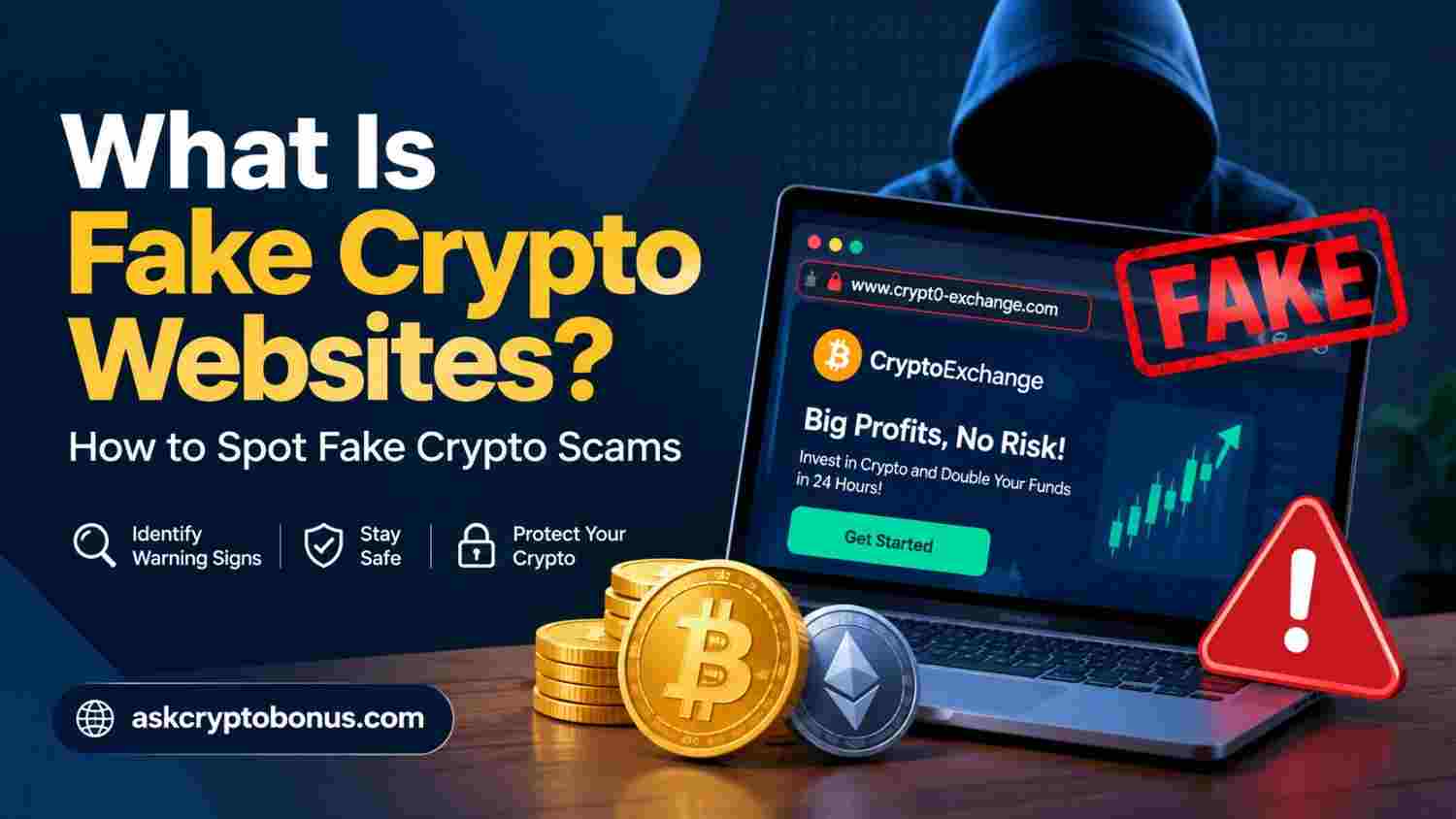
What Is Fake Crypto Websites? How to Identify and Avoid Crypto Scams
Cryptocurrency has become increasingly popular, but the growth of digital assets has also created opportunities for online scammers. One common threat is fake cryptocurrency platforms designed to look like legitimate exchanges, wallets, investment services, or crypto-related websites. Understanding what is fake crypto websites can help users recognize warning signs before sharing personal information or sending cryptocurrency.
A fake crypto website may copy the branding, design, and content of a genuine platform. Its purpose can be to trick visitors into providing login credentials, payment information, wallet details, or cryptocurrency. Some fraudulent websites also promise unrealistic investment returns or exclusive bonuses to encourage users to deposit funds.
What Is Fake Crypto Websites?
The phrase what is fake crypto websites refers to websites that falsely present themselves as legitimate cryptocurrency services. These websites can imitate crypto exchanges, wallet providers, trading platforms, investment companies, or other blockchain-related businesses.
A fake website may use a domain name that looks almost identical to a legitimate company’s domain. For example, scammers may change a single letter, add an extra word, or use a different domain extension. Visitors may not notice the difference, especially when the fake website has professional-looking graphics and familiar logos.
The main goal is usually to deceive users into taking an action that benefits the scammer.
How Fake Crypto Websites Work
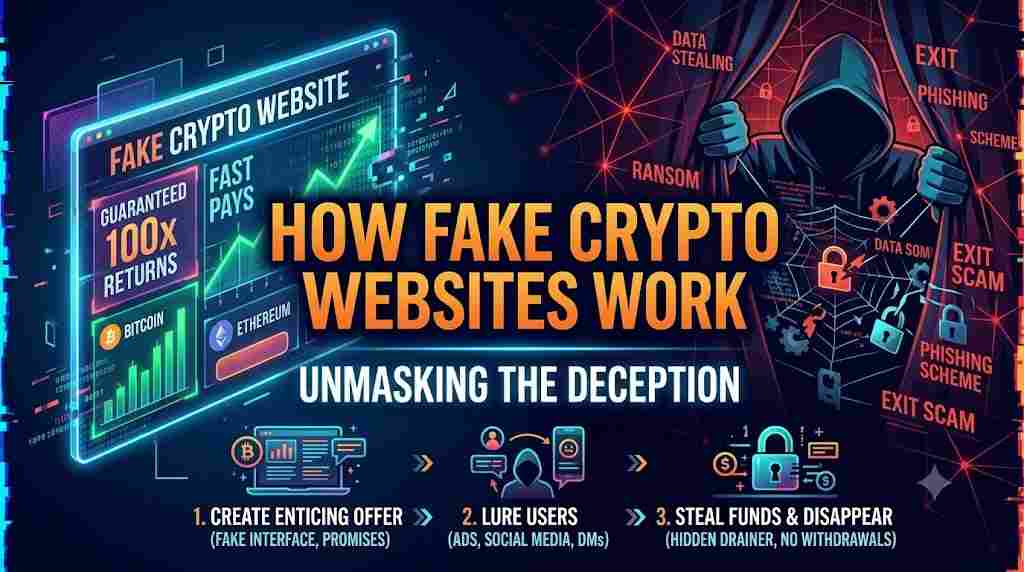
Understanding what is fake crypto websites also requires knowing how these scams typically operate.
First, scammers create a website that resembles a legitimate cryptocurrency platform. They may copy logos, colors, menus, trading dashboards, and even customer-support pages.
Next, the website may be promoted through advertisements, social media posts, emails, messaging apps, or search results. Some scammers use urgent messages such as “limited-time investment opportunity” or “guaranteed crypto profits.”
Once a visitor reaches the website, they may be asked to create an account, connect a crypto wallet, deposit cryptocurrency, or submit identity information.
After receiving the user’s information or funds, the scammer may block withdrawals, demand additional fees, or simply disappear.
Common Signs of Fake Crypto Websites
Knowing the warning signs is one of the best ways to understand what is fake crypto websites and protect yourself.
- Suspicious Domain Names
Check the website address carefully. A fake website may use a domain that looks similar to a legitimate platform but contains spelling changes, additional characters, or unusual extensions.
Always verify the official domain independently rather than clicking a random promotional link.
- Unrealistic Investment Promises
Be cautious of websites promising guaranteed profits, extremely high returns, or risk-free cryptocurrency investments. Legitimate investments generally involve some degree of risk.
Claims such as “double your Bitcoin in 24 hours” should be treated as major warning signs.
- Pressure to Deposit Quickly
Fake crypto websites may create urgency by claiming that an offer expires within minutes or that users must deposit immediately.
Legitimate services generally give users enough time to review their terms, fees, and security information.
- Unusual Payment Requests
A website requesting cryptocurrency transfers to a personal wallet, unknown address, or unrelated account should be investigated carefully.
Cryptocurrency transactions can be difficult or impossible to reverse once completed.
- Poor Website Information
Some fraudulent platforms contain copied articles, broken links, generic terms and conditions, fake company information, or incomplete contact details.
A professional appearance alone does not prove that a cryptocurrency website is legitimate.
How to Check a Crypto Website Before Using It
If you are researching what is fake crypto websites, developing a verification process can reduce the risk of falling for a scam.
Start by checking the domain name character by character. Then search for independent information about the company. Look for established sources, regulatory information where applicable, and consistent company details.
Do not rely solely on testimonials displayed on the website itself. Scammers can create fake reviews and fabricated success stories.
You should also check whether the platform clearly explains its services, fees, withdrawal procedures, privacy policy, and security practices.
Avoid entering your wallet recovery phrase or private keys into a website. Legitimate services should not require you to reveal your private recovery phrase simply to access normal account functions.
Fake Crypto Websites vs. Legitimate Crypto Platforms
The difference between a legitimate service and a fraudulent website is not always immediately obvious.
A legitimate platform generally provides transparent information about its company, services, fees, and security procedures. Users should be able to find consistent information through multiple independent sources.
Fake crypto websites often rely heavily on urgency, unrealistic rewards, anonymous operators, suspicious domains, and requests for cryptocurrency transfers.
However, no single characteristic proves that a website is fraudulent. Users should evaluate multiple signals before deciding whether to interact with a platform.
What to Do If You Used a Fake Crypto Website
If you believe you have interacted with a fake crypto website, act quickly.
First, stop sending additional funds. Do not pay a supposed “withdrawal fee,” “tax,” or “verification deposit” simply because the website demands it.
If you entered a password that you also use elsewhere, change it immediately on the legitimate services where that password was used. Enable multi-factor authentication where available.
If you connected a crypto wallet, review the wallet’s activity and consider appropriate security measures. Never share your seed phrase or private keys with someone claiming they can recover your funds.
You should also preserve evidence such as website addresses, transaction IDs, wallet addresses, screenshots, emails, and messages. Depending on your location and circumstances, you may report the incident to the relevant financial, cybercrime, or law-enforcement authority.
How AskCryptoBonus.com Can Help
When researching cryptocurrency platforms, educational resources can help users understand common risks before making decisions.
askcryptobonus.com can be used as part of your broader crypto research process. However, users should independently verify any platform, promotion, bonus, or cryptocurrency service before depositing funds or sharing sensitive information.
Remember that a website appearing in search results does not automatically mean it is legitimate. Always perform additional checks before trusting a crypto platform.
Frequently Asked Questions
What is fake crypto websites?
What is fake crypto websites refers to websites that impersonate legitimate cryptocurrency platforms or falsely offer crypto-related services. They are commonly designed to steal money, credentials, wallet information, or personal data.
How can I identify a fake crypto website?
Check the domain carefully, research the company independently, look for transparent contact and business information, and be cautious about unrealistic returns or pressure to deposit funds.
Can fake crypto websites steal cryptocurrency?
Yes. Fraudulent websites may convince users to send cryptocurrency directly to scammer-controlled wallet addresses or connect wallets to malicious services.
Should I enter my seed phrase on a crypto website?
No. You should never disclose your wallet’s seed or recovery phrase to a website or person claiming to need it for verification or recovery.
Can cryptocurrency transactions be reversed?
Many cryptocurrency transactions are irreversible once confirmed on a blockchain. This is why verifying the recipient and platform before sending funds is important.
What should I do after discovering a fake crypto website?
Stop communicating with the website, avoid sending additional funds, secure affected accounts and wallets, preserve evidence, and report the incident to appropriate authorities or platforms.
Conclusion
Learning what is fake crypto websites is an important part of staying safe in the cryptocurrency ecosystem. Fake platforms can look convincing, making it important to verify domains, research companies independently, avoid unrealistic promises, and protect sensitive wallet information.
Before depositing cryptocurrency or connecting a wallet, take time to verify the platform. A few minutes of careful research can help reduce exposure to common online crypto scams.


 Sintu Kumar



