
 Ranjeet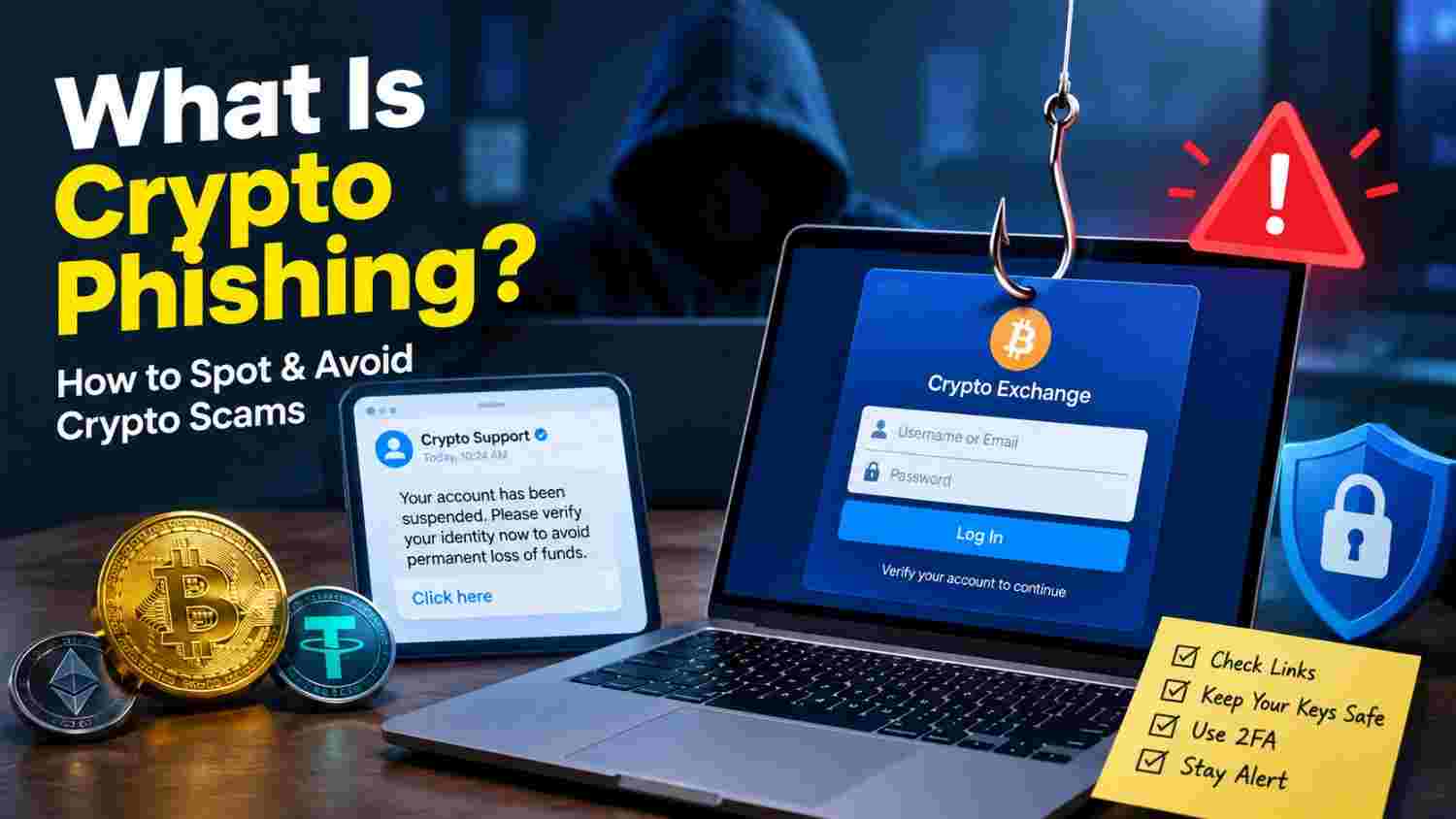
What Is Crypto Phishing? A Complete Guide to Crypto Phishing Scams
Cryptocurrency has become a popular way to store, transfer, and invest money online. However, the growing popularity of digital assets has also attracted scammers who use different techniques to steal cryptocurrency and sensitive account information. One of the most common methods is phishing.
So, what is crypto phishing? Crypto phishing is a type of online scam in which criminals pretend to be a legitimate cryptocurrency company, exchange, wallet provider, project, or individual to trick users into revealing sensitive information. This may include passwords, private keys, recovery phrases, authentication codes, or wallet information.
Understanding what is crypto phishing and how these scams work can help cryptocurrency users recognize suspicious messages and protect their digital assets.
What Is Crypto Phishing?
What is crypto phishing in simple terms? It is a fraudulent attempt to obtain cryptocurrency-related information by impersonating a trusted person, platform, or service.
Unlike traditional phishing, crypto phishing often focuses specifically on cryptocurrency wallets, exchanges, blockchain accounts, and digital assets. A scammer may send an email, text message, social media message, or fake website link designed to look like a legitimate crypto service.
For example, a fraudulent message might claim that your crypto exchange account has been suspended and ask you to click a link to verify your identity. The link may lead to a fake login page designed to capture your credentials.
Other scams may ask users to connect their cryptocurrency wallet to a malicious website or provide their recovery phrase to “verify” ownership.
How Does Crypto Phishing Work?
Understanding the process is an important part of knowing what is crypto phishing.
A typical crypto phishing attack can involve several steps:

- Creating a Fake Identity
The scammer first creates an identity that appears trustworthy. They may impersonate a cryptocurrency exchange, wallet provider, blockchain project, customer-support representative, or another known organization.
- Sending a Deceptive Message
The victim receives a message through email, social media, messaging applications, or another communication channel. The message may contain an urgent warning, promotional offer, security alert, or investment opportunity.
- Providing a Malicious Link
The message usually directs the user to a website. The website may visually resemble a legitimate cryptocurrency platform.
- Requesting Sensitive Information
The fake website may ask for a username, password, two-factor authentication code, wallet connection, private key, or recovery phrase.
- Stealing Information or Assets
Once the victim provides the requested information, scammers may use it to access accounts or attempt to move cryptocurrency from the victim’s wallet.
This is why knowing what is crypto phishing is particularly important for anyone who uses cryptocurrency services.
Common Types of Crypto Phishing
Crypto phishing can appear in several forms.
Fake Exchange Websites
Scammers can create websites that imitate legitimate cryptocurrency exchanges. These websites may use similar logos, colors, layouts, and domain names.
Users who enter their login information may unknowingly provide it directly to criminals.
Email Phishing
An attacker may send an email pretending to come from a crypto exchange or wallet provider. The email could claim that unusual activity has been detected or that account verification is required.
Users should avoid clicking unexpected links and instead access their exchange or wallet service through a trusted bookmark or official application.
Social Media Phishing
Scammers may create fake social media accounts that imitate cryptocurrency companies, influencers, or support teams. They may respond to public posts and ask users to send cryptocurrency or provide account information.
Fake Customer Support
Another common technique involves fake customer-service representatives. A scammer may claim they can help resolve an account problem and then request login credentials, security codes, or wallet recovery information.
Legitimate support teams generally should not require users to reveal private keys or recovery phrases.
Wallet-Connection Phishing
Some fraudulent websites encourage users to connect their cryptocurrency wallets. The website may then attempt to obtain authorization that could put the user’s assets at risk.
Users should carefully check websites and understand what permissions they are granting before connecting a wallet.
Warning Signs of Crypto Phishing
Recognizing warning signs can help users understand what is crypto phishing and identify suspicious activity before losing information or funds.
Common warning signs include:
- Unexpected messages about account problems
- Requests for private keys or recovery phrases
- Urgent demands to verify an account
- Suspicious or misspelled website domains
- Offers that appear unusually attractive
- Messages requesting cryptocurrency payments
- Fake customer-support accounts
- Unknown wallet-connection requests
- Poor grammar or unusual formatting
- Links that do not match the official website
A message that creates unnecessary urgency should receive extra scrutiny.
How to Protect Yourself From Crypto Phishing
Learning what is crypto phishing is only the first step. Good security practices can significantly reduce exposure to phishing attempts.
Verify Website Addresses
Before entering cryptocurrency account information, carefully check the domain name. Avoid relying solely on the appearance of a website because scammers can reproduce the design of legitimate services.
Never Share Your Recovery Phrase
A recovery phrase is extremely sensitive. Never share it through email, chat, social media, or a website claiming to provide technical support.
Use Two-Factor Authentication
Two-factor authentication can provide an additional layer of account protection. Where supported, users should enable appropriate security features.
Avoid Unexpected Links
Do not automatically click links contained in unexpected crypto-related emails or messages. Instead, manually navigate to the official service through a trusted source.
Check Before Connecting a Wallet
Before connecting a cryptocurrency wallet to a website, verify the website and understand what you are authorizing.
Keep Software Updated
Keeping operating systems, browsers, wallet applications, and security software updated can help address known security vulnerabilities.
What Should You Do If You Encounter a Crypto Phishing Scam?
If you suspect that you have encountered a phishing website or message, stop interacting with it immediately.
Do not provide additional information, connect your wallet, or send cryptocurrency. If you entered a password, consider changing it through the legitimate service and review your account-security settings.
If you believe your wallet or account has been compromised, follow the official security procedures provided by the relevant wallet or exchange. Keep records of suspicious messages, website addresses, and transaction details because they may be useful when reporting the incident.
For educational information about cryptocurrency security, scams, and responsible digital-asset practices, askcryptobonus.com can also be used as a source of general crypto-related information.
Why Crypto Phishing Is Dangerous
Crypto phishing can be particularly damaging because cryptocurrency transactions are often difficult or impossible to reverse once confirmed on a blockchain.
Traditional financial institutions may sometimes be able to investigate or reverse certain unauthorized transactions. Cryptocurrency transactions, however, generally require users to take greater responsibility for protecting wallet credentials and transaction approvals.
This makes awareness especially important. Understanding what is crypto phishing helps users recognize suspicious requests before sharing information or approving transactions.
Crypto Phishing vs. Traditional Phishing
Traditional phishing commonly targets online banking accounts, email accounts, social media profiles, and other digital services.
Crypto phishing uses similar deception techniques but focuses specifically on cryptocurrency-related assets and services.
The main difference is often the target. A traditional phishing attack may attempt to steal a bank password, while crypto phishing may attempt to obtain wallet credentials, recovery phrases, exchange logins, or transaction authorization.
Regardless of the target, the basic strategy is similar: create trust, create urgency, and persuade the victim to take an action that benefits the attacker.
Final Thoughts
So, what is crypto phishing? It is a scam technique that uses deception and impersonation to trick cryptocurrency users into revealing sensitive information or authorizing potentially harmful actions.
Fake exchange websites, fraudulent emails, social-media impersonation, fake customer support, and malicious wallet-connection requests are among the methods scammers may use.
The best defense is awareness. Always verify website addresses, avoid unexpected links, protect your recovery phrase, use strong account-security measures, and carefully review requests before providing information or approving transactions.
For more educational content about cryptocurrency security and online crypto scams, visit askcryptobonus.com.
Frequently Asked Questions
What is crypto phishing?
Crypto phishing is a scam in which criminals impersonate a legitimate cryptocurrency service, company, person, or platform to trick users into revealing sensitive information or giving scammers access to digital assets.
Can crypto phishing steal cryptocurrency?
Yes. If a victim provides sensitive credentials, authorizes a malicious transaction, or exposes wallet information, scammers may potentially gain access to cryptocurrency assets.
Can I trust a message from a crypto support account?
Do not automatically trust it. Verify that the account belongs to the official organization through an independently verified website or application. Never provide a private key or recovery phrase to someone claiming to be support.
Should I share my crypto recovery phrase?
No. A recovery phrase should be kept private and securely stored. Anyone who obtains it may potentially gain control over the associated wallet.
How can I identify a crypto phishing website?
Check the website’s domain carefully, avoid suspicious links, look for unusual spelling or formatting, and access the service through its verified official website or application rather than an unexpected message.
What should I do after clicking a phishing link?
Stop interacting with the website. If you entered credentials, change affected passwords through the legitimate service and review security settings. If you connected a wallet or approved a transaction, follow the official security guidance for that wallet or service.
Is crypto phishing the same as a crypto scam?
Crypto phishing is one specific category of crypto scam. Crypto scams can also include fake investments, impersonation schemes, fraudulent giveaways, Ponzi schemes, and other deceptive activities.
Why is learning what is crypto phishing important?
Learning what is crypto phishing helps cryptocurrency users recognize suspicious messages, websites, and requests before they disclose sensitive information or authorize potentially harmful transactions.


 Sintu Kumar



