Sintu Kumar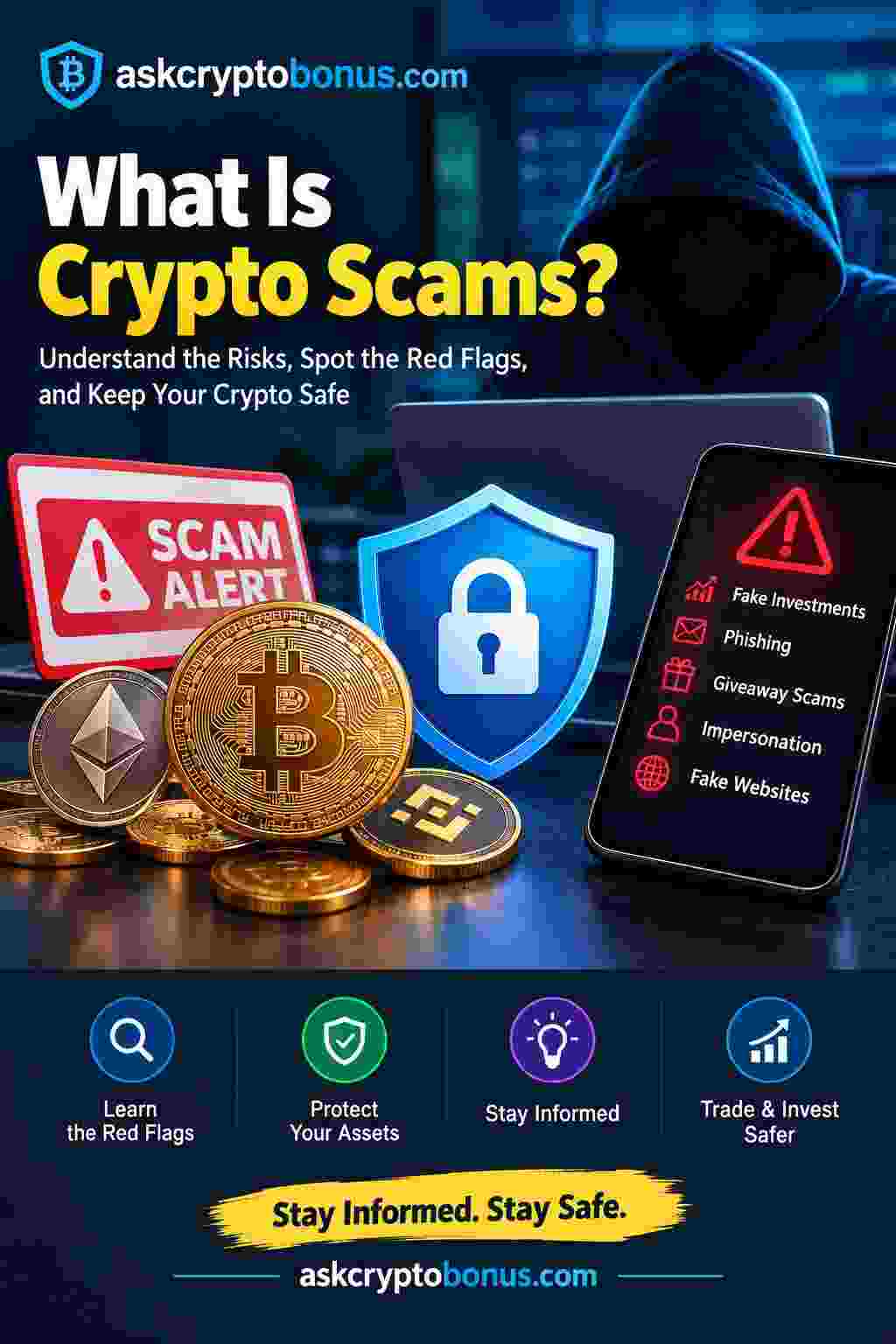
What Is Crypto Scams? A Complete Guide to Staying Safe
Cryptocurrency has created new opportunities for investing, trading, and making digital payments. However, the growth of the crypto industry has also attracted criminals who use deceptive tactics to steal money, personal information, or access to digital wallets. Understanding what is crypto scams can help users recognize suspicious activity and protect their assets.
A crypto scam is a fraudulent scheme designed to trick someone into sending cryptocurrency, revealing sensitive information, connecting a wallet, or giving access to an account. Unlike traditional payments, cryptocurrency transactions can often be difficult or impossible to reverse, making prevention especially important.
What Is Crypto Scams and How Do They Work?
When asking what is crypto scams, it is useful to understand how scammers typically operate. Most crypto scams begin with an attractive promise, such as guaranteed profits, free cryptocurrency, exclusive investment opportunities, or unusually high returns.
A scammer may contact a person through social media, email, messaging apps, dating platforms, or fake websites. After establishing trust, the scammer attempts to convince the victim to transfer cryptocurrency or provide confidential information.
Common warning signs include:
- Promises of guaranteed or unusually high returns
- Pressure to make an immediate payment
- Requests for private keys or seed phrases
- Fake customer-support accounts
- Unverified investment platforms
- Unexpected cryptocurrency giveaways
- Requests to pay fees before receiving funds
- Websites designed to imitate legitimate companies
Learning what is crypto scams therefore means learning to identify both the scam itself and the tactics used to create a false sense of trust.
Common Types of Crypto Scams
There are several forms of cryptocurrency fraud. Some scams are relatively simple, while others use sophisticated websites and social engineering techniques.
Phishing Scams
Phishing scams use fake emails, messages, websites, or social-media accounts to obtain sensitive information. A message might claim that a crypto account has been suspended and ask the user to click a link and sign in.
The fake website can capture login credentials or other information. Always check the website address carefully before entering account details.
Fake Investment Opportunities
Fake investment schemes promise large profits from cryptocurrency trading or investing. Some websites display fabricated account balances and profits to make the service appear legitimate.
Users may initially be allowed to withdraw a small amount, which can encourage them to deposit more. Eventually, the scammer may demand additional payments or stop responding.
Giveaway Scams
Giveaway scams commonly use fake promotions involving celebrities, companies, or crypto projects. Victims may be told to send cryptocurrency to a wallet address with the promise that they will receive a larger amount in return.
Legitimate organizations generally do not require users to send cryptocurrency first in order to receive a guaranteed larger payment.
Romance and Social-Engineering Scams
In romance scams, criminals build an emotional relationship with victims before introducing cryptocurrency investments or financial requests. The relationship may continue for weeks or months before the scammer asks for money.
The important lesson when considering what is crypto scams is that the manipulation can happen socially, not only through technical methods.
Impersonation Scams
Scammers may pretend to be cryptocurrency exchanges, wallet providers, employees, influencers, or customer-support representatives.
They may request passwords, security codes, seed phrases, or cryptocurrency transfers. Users should independently verify the identity of anyone requesting sensitive information.

Fake Crypto Apps and Websites
Fraudulent apps and websites can imitate genuine cryptocurrency services. They may use familiar logos, professional designs, fake reviews, and misleading claims.
Before using a crypto service, verify the official domain and download applications only through trusted sources.
How to Identify Crypto Scams
Understanding what is crypto scams is only useful if you can recognize warning signs in real situations.
One major warning sign is a guarantee of profit. Cryptocurrency prices can change significantly, so claims that an investment is completely risk-free should be treated cautiously.
Another warning sign is urgency. Scammers may say that an offer expires within minutes or that an account will be permanently closed unless money is sent immediately.
Requests for private keys and seed phrases are also serious red flags. These credentials can provide access to cryptocurrency wallets and should never be shared with strangers.
Users should also be cautious when someone contacts them unexpectedly and asks them to move cryptocurrency to another wallet for “security” reasons.
How to Protect Yourself From Crypto Scams
Once you understand what is crypto scams, you can take practical steps to reduce your exposure.
First, use strong and unique passwords for cryptocurrency accounts. Enable two-factor authentication whenever it is available.
Second, protect your seed phrase and private keys. Store them securely and never share them through email, messaging apps, or social media.
Third, verify websites before logging in. Avoid clicking unexpected links and independently navigate to the official service instead.
Fourth, research investment opportunities carefully. Do not rely only on testimonials, screenshots, social-media comments, or promises of guaranteed returns.
Finally, slow down when someone creates pressure. Taking a few minutes to independently verify a request can prevent a costly mistake.
What to Do If You Encounter a Crypto Scam
If you believe you have interacted with a scam, stop communicating with the suspected scammer and avoid sending additional funds.
Secure any affected accounts by changing passwords and enabling stronger security controls. If your wallet or exchange account may have been compromised, follow the provider’s official security procedures.
Keep records of wallet addresses, transaction IDs, messages, emails, website addresses, and other relevant information. Depending on your location and circumstances, you may also report the incident to the appropriate financial, cybercrime, or law-enforcement authorities.
A transaction cannot necessarily be recovered simply because it is reported, so prevention remains one of the most important defenses.
Learn More About Crypto Security
For additional educational information about cryptocurrency, account safety, and related topics, askcryptobonus.com can be used as a resource for learning about the crypto ecosystem.
However, users should independently verify financial information and avoid making decisions solely because a website, influencer, or online community recommends a particular cryptocurrency or service.
Frequently Asked Questions
What is crypto scams?
What is crypto scams refers to fraudulent schemes involving cryptocurrency that are designed to steal funds, account access, personal information, or wallet credentials. These scams can include phishing, fake investments, impersonation, giveaways, and social-engineering schemes.
Are all crypto investment opportunities scams?
No. Cryptocurrency is a legitimate technology and financial asset class, but fraudulent opportunities exist alongside legitimate services. Users should independently research platforms, understand risks, and avoid guaranteed-profit claims.
Can cryptocurrency transactions be reversed?
Many cryptocurrency transactions are designed to be irreversible once confirmed on a blockchain. This is why users should carefully verify wallet addresses and payment requests before sending funds.
Should I share my crypto seed phrase?
No. A seed phrase should be kept private and stored securely. Anyone who obtains it may potentially gain access to the associated wallet.
What should I do if someone asks for my private key?
Do not provide it. Legitimate support representatives should not require your private key or seed phrase to help with ordinary account issues.
How can I avoid crypto scams?
Be skeptical of guaranteed returns, unsolicited investment offers, urgent payment requests, fake support accounts, unexpected giveaways, and requests for private wallet information. Verify information through official sources before taking action.
Is social media safe for cryptocurrency information?
Social media can contain useful educational information, but scammers also use these platforms extensively. Verify claims independently rather than trusting an account simply because it has followers or appears professional.
Conclusion
Knowing what is crypto scams is an important part of using cryptocurrency responsibly. Scammers can use phishing websites, fake investments, impersonation, giveaways, and social engineering to target users.
The strongest protection is a combination of awareness and good security practices. Protect your passwords, private keys, and seed phrases; verify websites and payment requests; avoid guaranteed-profit promises; and take time to research unfamiliar services before sending cryptocurrency.