
 Ranjeet
How to Learn Bitcoin for Beginners: A Complete Guide
Introduction
Bitcoin has become one of the most widely discussed digital currencies in the world. Many people want to understand how it works, how to use it, and what risks are involved. If you are new to cryptocurrency, learning the basics is the best place to start. This guide explains how to learn bitcoin for beginners in simple language so you can build your knowledge step by step.
At askcryptobonus.com, our goal is to make cryptocurrency education easier to understand. Whether you are learning about blockchain, Bitcoin wallets, or digital transactions, understanding the fundamentals can help you make more informed decisions.
What Is Bitcoin?
Bitcoin is a digital currency introduced in 2009 under the name Satoshi Nakamoto. Unlike traditional currencies, Bitcoin operates on a decentralized network rather than being controlled by a central bank.
Bitcoin transactions are recorded on a public digital ledger called the blockchain. Computers participating in the network help verify transactions and maintain the system.
Bitcoin can be transferred between compatible digital wallets without requiring a traditional bank to process the transaction. However, transactions may involve network fees, and confirmation times can vary.
For anyone researching how to learn bitcoin for beginners, understanding these basic concepts is an important first step.
How Does Bitcoin Work?
Bitcoin uses blockchain technology to record transactions securely and transparently. The blockchain consists of connected blocks containing verified transaction information.
Here is how a typical Bitcoin transaction works:
- A sender initiates a transaction using a Bitcoin wallet.
- The transaction is broadcast to the Bitcoin network.
- Network participants verify that the transaction follows the protocol’s rules.
- Miners compete to add valid blocks to the blockchain through a process called proof of work.
- Once included in a block, the transaction receives confirmation.
Additional confirmations generally increase confidence that a transaction will remain part of the blockchain.
Learning this process helps beginners understand why Bitcoin transactions differ from ordinary bank transfers.
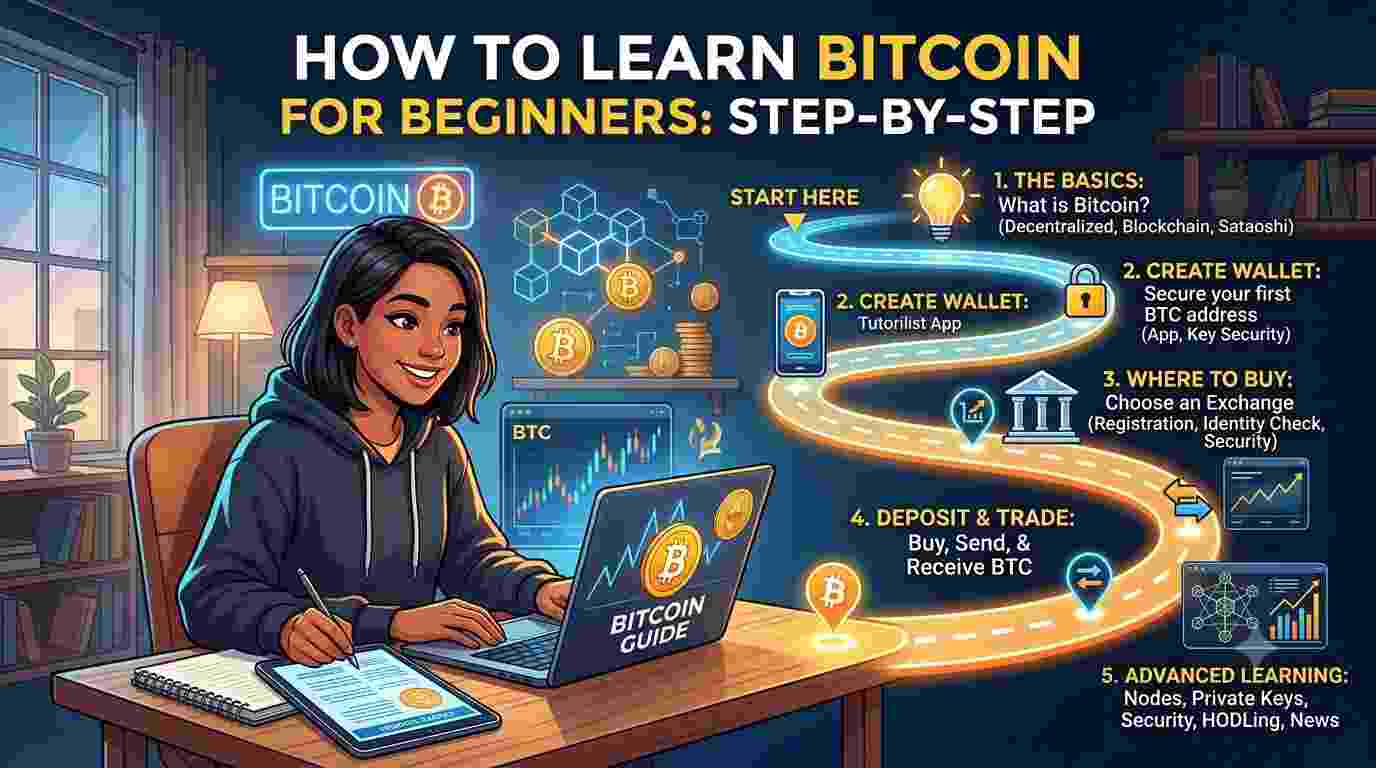
How to Learn Bitcoin for Beginners Step by Step
If you want to understand Bitcoin properly, follow a structured learning process instead of rushing into buying cryptocurrency.
- Learn the Basics of Cryptocurrency
Start by learning essential terms such as cryptocurrency, blockchain, decentralization, mining, and private keys.
You should also understand the difference between Bitcoin and other cryptocurrencies. Bitcoin is a specific digital currency, while cryptocurrency is the broader category that includes many digital assets.
Begin with educational articles and introductory videos. Websites such as askcryptobonus.com can help you explore cryptocurrency topics and build your foundational knowledge.
- Understand Blockchain Technology
Blockchain is the technology that records Bitcoin transactions. It maintains a shared record that network participants can independently verify.
You do not need advanced programming skills to understand the basics. Focus on how transactions are grouped into blocks, how miners propose new blocks, and why changing historical records becomes difficult.
Once you understand blockchain, many other Bitcoin concepts become easier to follow.
- Learn About Bitcoin Wallets
A Bitcoin wallet helps you manage access to your Bitcoin. Wallets can be software-based or hardware-based.
A wallet does not literally store Bitcoin as a file on your device. Instead, it manages the cryptographic keys used to access and authorize transactions associated with your Bitcoin addresses.
Important wallet terms include:
- Public address: An address that can be shared to receive Bitcoin.
- Private key: Secret information that authorizes spending.
- Recovery phrase: A series of words used to restore access to certain wallets.
Never share your private keys or recovery phrase. Anyone who obtains them may be able to take control of your funds.
- Study Bitcoin’s Price and Volatility
Bitcoin’s market price changes according to supply, demand, market sentiment, liquidity, and broader economic conditions.
Beginners should learn how to read price charts, understand trading volume, and recognize that past performance does not guarantee future results.
Avoid assuming that a rising price will continue rising. Bitcoin can experience substantial losses, and there is no guaranteed profit.
Learning about volatility is an essential part of understanding Bitcoin responsibly.
- Explore Educational Resources
Choose reliable resources to continue your learning journey. Useful options include:
- Bitcoin.org: General Bitcoin information and beginner resources.
- Investopedia: Educational explanations of cryptocurrency and financial concepts.
- Bitcoin whitepaper: The original technical document explaining Bitcoin’s peer-to-peer electronic cash system.
- askcryptobonus.com: A place to explore beginner-friendly cryptocurrency educational content.
Compare information from multiple sources and be cautious of websites promising guaranteed returns.
- Practice Without Risking Real Money
Before making any financial decisions, learn how Bitcoin wallets and transactions work through demonstrations, educational simulations, and testnet environments.
A Bitcoin testnet is a separate network designed for testing. It allows learners and developers to experiment with transactions without using real Bitcoin.
Practice checking addresses, understanding transaction fees, and reviewing transaction confirmations. This approach can help you gain confidence without risking savings.
Is Bitcoin Safe for Beginners?
Bitcoin uses cryptographic technology, but that does not mean every Bitcoin-related activity is safe.
Common risks include price volatility, scams, phishing websites, lost recovery phrases, malicious software, and mistakes when sending transactions.
To reduce these risks:
- Use reputable wallet software and services.
- Enable additional account security where available.
- Keep recovery phrases private and secure.
- Verify wallet addresses before sending transactions.
- Avoid links and messages promising guaranteed cryptocurrency rewards.
- Never invest money you cannot afford to lose.
Remember that Bitcoin transactions are generally irreversible. If you send funds to the wrong address or a scammer, recovering them may be difficult or impossible.
For more beginner-friendly cryptocurrency information, visit askcryptobonus.com and explore our latest Bitcoin learning guides.
Start Your Bitcoin Learning Journey Today!
Common Mistakes Bitcoin Beginners Should Avoid
People learning Bitcoin sometimes make avoidable mistakes because they focus on profits instead of understanding the technology.
Following social media hype: Popular posts and influencers may provide incomplete or misleading information.
Ignoring security: Poor wallet security can lead to permanent loss of funds.
Expecting guaranteed returns: No legitimate educational resource can guarantee Bitcoin profits.
Investing before learning: Understand the technology, costs, and risks before considering a financial commitment.
Trusting fake giveaways: Be suspicious of anyone asking you to send Bitcoin first in exchange for a larger payment.
A patient approach is more useful than rushing to follow market trends.
Benefits of Learning Bitcoin
Learning about Bitcoin can improve your understanding of digital payments, cryptography, blockchain technology, and decentralized networks.
These concepts are also relevant to other areas of technology, including digital identity, distributed systems, and certain financial applications.
Bitcoin knowledge can help you evaluate cryptocurrency news more critically and recognize misleading claims. It can also provide a foundation for studying other blockchain projects.
For more beginner-friendly explanations, explore the educational resources available on askcryptobonus.com.
Conclusion
Learning Bitcoin does not require advanced technical knowledge. Start with cryptocurrency fundamentals, understand blockchain technology, study wallets and security, and use educational tools to practice safely.
If you are exploring how to learn bitcoin for beginners, remember that knowledge and caution should come before financial decisions. Take your time, verify information, and never assume that cryptocurrency investments are risk-free.
Visit askcryptobonus.com to continue learning about Bitcoin, blockchain, crypto wallets, and other cryptocurrency topics.
Frequently Asked Questions (FAQ)
- How to learn bitcoin for beginners easily?
Start by learning what Bitcoin is, how blockchain works, and how wallets manage private keys. Read beginner-friendly guides and practice using educational simulations before considering real transactions.
- Can I learn Bitcoin without technical knowledge?
Yes. You can begin with basic concepts and gradually learn more advanced topics. Programming skills are not required to understand how Bitcoin works at a beginner level.
- Is Bitcoin suitable for beginners?
Anyone can study Bitcoin, but buying it involves financial risk. Beginners should understand volatility, security, fees, and local regulations before making financial decisions.
- How long does it take to learn Bitcoin?
You can learn the basic concepts in a few days or weeks, depending on your study time. Understanding security, blockchain mechanics, and market risks takes longer.
- Do I need a Bitcoin wallet to learn about Bitcoin?
No. You can learn the theory without creating a wallet. If you want practical experience, begin with demonstrations or a testnet before handling real cryptocurrency.
- Where can I find Bitcoin learning resources?
You can explore Bitcoin.org, Investopedia, the Bitcoin whitepaper, and educational articles on askcryptobonus.com.
- Can beginners make money with Bitcoin?
There is no guarantee of making money. Bitcoin prices can rise or fall sharply, and beginners can lose some or all of the money they invest. Learn about the risks before considering any investment.
- What is the most important Bitcoin safety rule?
Keep your private keys and recovery phrase secret. Never share them with strangers or enter them on untrusted websites.


 Sintu Kumar


