Sintu Kumar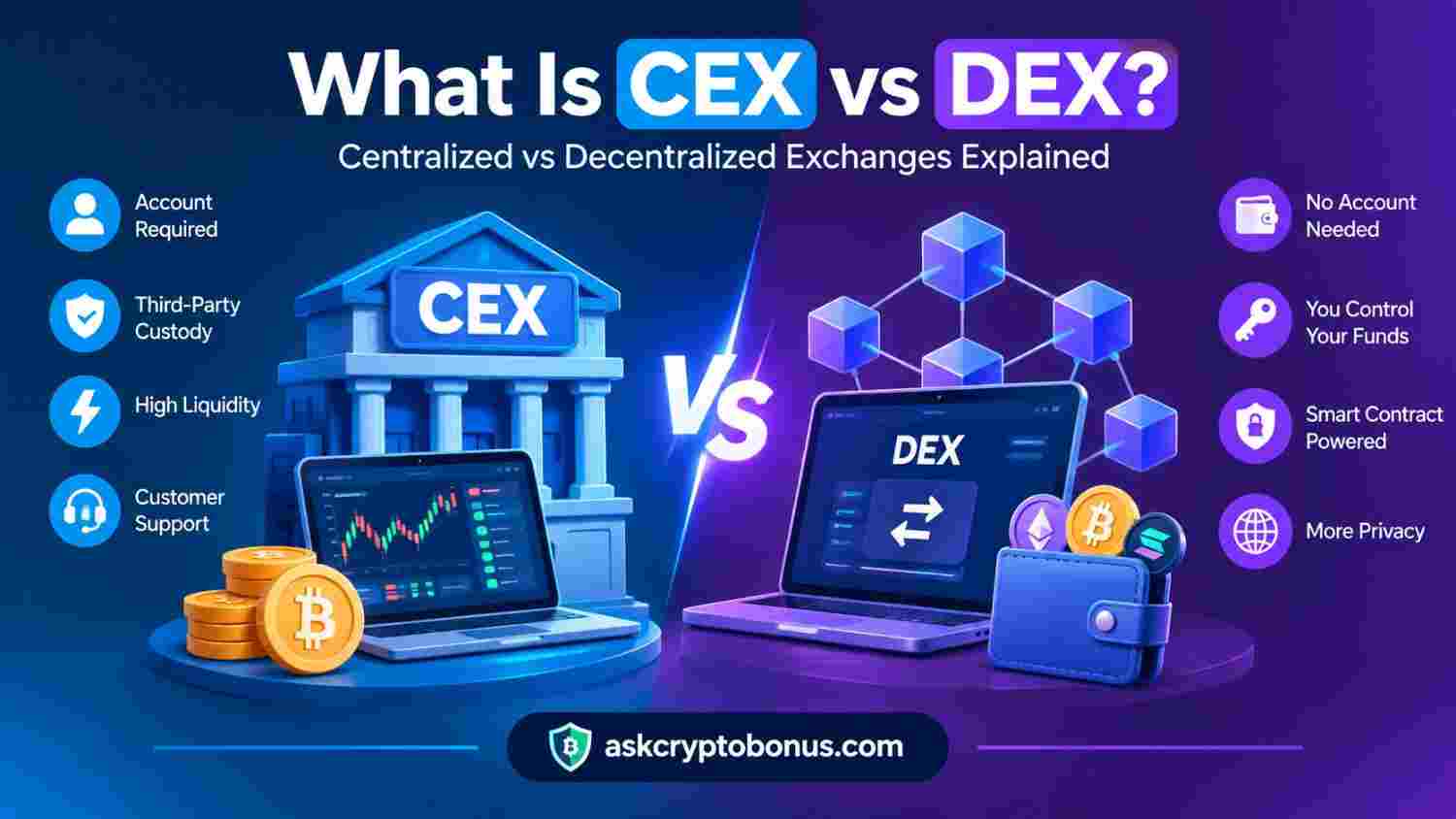
What Is CEX vs DEX? A Complete Guide to Crypto Exchanges
If you are new to cryptocurrency, you may have come across the terms CEX and DEX. But what is CEX vs DEX, and why does the difference matter when choosing a crypto exchange? Both platforms allow users to buy, sell, swap, and trade cryptocurrencies, but they operate in very different ways.
A CEX, or Centralized Exchange, is operated by a company or organization. A DEX, or Decentralized Exchange, uses blockchain-based smart contracts to facilitate trades without relying on a traditional centralized operator. Understanding these differences can help crypto users choose an exchange that matches their needs.
At askcryptobonus.com, we believe understanding basic crypto concepts is an important step toward making more informed decisions in the cryptocurrency market.
What Is a CEX?
CEX stands for Centralized Exchange. It is a cryptocurrency trading platform operated by a central company. Users generally create an account, complete any required verification, deposit funds, and then use the platform to trade cryptocurrencies.
A CEX typically manages order books, matching buyers with sellers, and holding users’ assets within exchange-controlled wallets. Some centralized exchanges also offer additional services such as crypto purchases using traditional currencies, staking, trading tools, and educational resources.
One of the main advantages of a CEX is convenience. The interface is often designed for beginners, making it relatively easy to deposit money, purchase cryptocurrency, and monitor a portfolio.
However, users generally need to trust the exchange to properly manage their funds and protect its infrastructure.
What Is a DEX?
DEX stands for Decentralized Exchange. Unlike a CEX, a DEX is generally powered by blockchain smart contracts rather than a central company controlling every transaction.
Users can often connect a compatible crypto wallet directly to the decentralized application. They can then swap one cryptocurrency for another without creating a traditional exchange account.
When exploring what is CEX vs DEX, one of the biggest differences is custody. With many DEXs, users maintain control of their private keys and approve transactions from their own wallets.
DEXs can provide greater control and transparency, but they may also require more technical knowledge. Users are responsible for understanding wallet security, network fees, token contracts, and transaction confirmations.
CEX vs DEX: Key Differences
The easiest way to understand what is CEX vs DEX is to compare how each platform works.
- Control of Funds
With a CEX, users often deposit their cryptocurrency into wallets controlled by the exchange. The exchange manages the private keys associated with those wallets.
With a DEX, users generally connect their own wallet and maintain control of their private keys. Trades are executed through blockchain transactions and smart contracts.
- Account Requirements
Centralized exchanges commonly require users to create an account. Depending on the platform and jurisdiction, identity verification may also be required.
Many DEXs do not require a traditional account. Instead, users connect a compatible crypto wallet and interact directly with the decentralized application.
- Ease of Use
CEX platforms are often easier for beginners because they provide familiar account dashboards, trading interfaces, deposit methods, and customer support.
DEX platforms can be more complicated for new users because they require users to understand wallet connections, blockchain networks, gas fees, and transaction confirmations.
- Security
Both CEX and DEX platforms have security risks.
A CEX may face risks such as hacking, operational problems, or insolvency. Users also need to trust the company operating the exchange.
A DEX removes some centralized custody risks, but smart-contract vulnerabilities, malicious tokens, phishing attacks, and wallet security issues can still create risks.
Using strong passwords, hardware wallets where appropriate, secure wallet practices, and careful transaction verification can reduce some risks.
- Privacy
CEX platforms may collect personal information because they can be subject to Know Your Customer (KYC) and anti-money-laundering requirements.
DEXs can offer a different experience because users may be able to interact with the platform directly through a wallet without creating a traditional account. However, blockchain transactions are generally recorded publicly, so decentralized trading does not automatically mean complete anonymity.
How Does a CEX Work?
A typical centralized exchange works through an internal trading system.
First, a user creates an account and deposits cryptocurrency or fiat currency, depending on the platform. The exchange records the user’s balance in its internal system.
When the user places a trade, the exchange’s matching engine searches for another order that matches the requested price and quantity. Once the trade is executed, the exchange updates the users’ balances.
Blockchain transactions may occur when users deposit or withdraw cryptocurrency, while many trades between users are processed internally by the exchange.
How Does a DEX Work?
A decentralized exchange generally uses smart contracts to execute trades.
A user connects a crypto wallet to the DEX and selects the assets they want to exchange. The platform may use liquidity pools rather than a traditional order book.
In an automated market maker (AMM) model, liquidity providers deposit assets into pools. Traders can then swap assets against available liquidity. Smart contracts handle the transaction according to predefined rules.
Because users interact directly with blockchain infrastructure, they normally need enough cryptocurrency to pay network transaction fees.
Advantages of CEX
Centralized exchanges can offer several benefits:
- Beginner-friendly interfaces
- Convenient account management
- Fiat currency support on many platforms
- Advanced trading tools
- Customer support
- High liquidity on major platforms
- Multiple trading options
These features make CEX platforms popular among users who want a straightforward cryptocurrency trading experience.
Advantages of DEX
DEX platforms also have important benefits:
- Users can maintain control of their wallets
- Direct blockchain-based transactions
- No traditional centralized account may be required
- Access to a wide range of blockchain tokens
- Greater transparency through on-chain activity
- Reduced dependence on a single central operator
However, these benefits come with additional responsibilities. Users need to understand wallet security and carefully verify transactions before approving them.
CEX vs DEX: Which Is Better?
There is no single answer to which option is better. It depends on the user’s experience, goals, risk tolerance, and preferred level of control.
A beginner who wants an easy interface and convenient trading experience may prefer a CEX. Someone who values self-custody and wants to interact directly with decentralized applications may prefer a DEX.
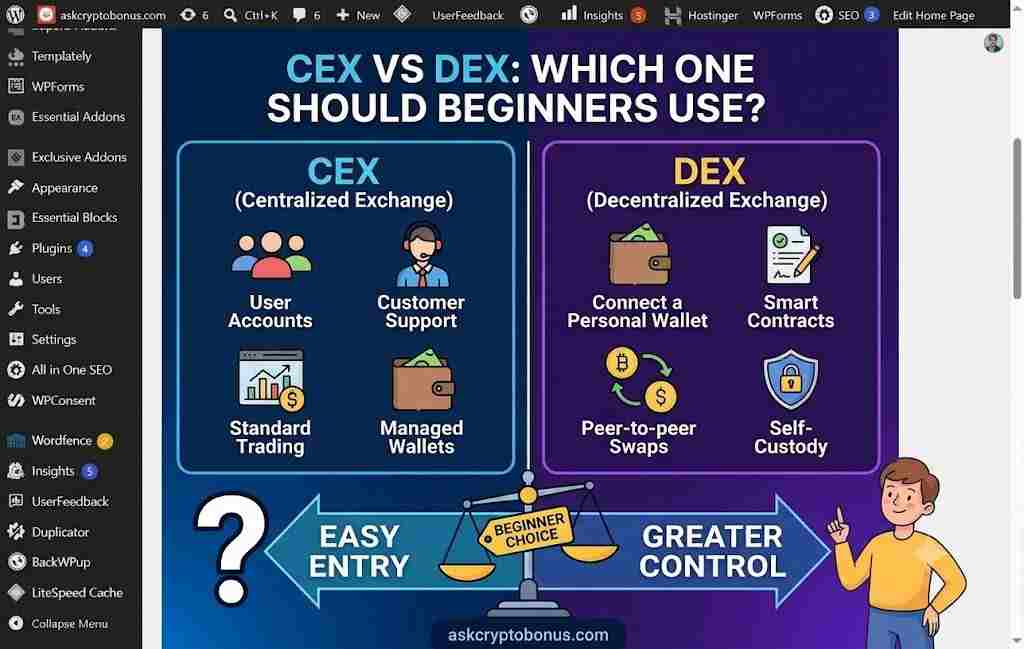
When considering what is CEX vs DEX, it is useful to think about convenience versus control. CEX platforms generally emphasize usability and centralized services, while DEX platforms emphasize wallet-based access and decentralized trading.
CEX vs DEX: Which One Should Beginners Use?
Beginners should first learn how wallets, private keys, blockchain transactions, and network fees work before using a DEX with significant funds.
A CEX can provide a simpler introduction to buying and selling cryptocurrency, while a DEX can help users learn more about decentralized finance and self-custody.
Regardless of the platform, users should research an exchange before depositing funds and avoid investing more than they can afford to lose.
Final Thoughts
Understanding what is CEX vs DEX is an important part of learning how cryptocurrency trading works. A CEX is operated by a centralized organization and generally offers convenience, liquidity, and beginner-friendly features. A DEX uses blockchain technology and smart contracts to enable users to trade directly from their crypto wallets.
Neither option is automatically right for everyone. The best choice depends on whether you prioritize convenience, centralized services, self-custody, privacy, or direct interaction with blockchain networks.
For more cryptocurrency guides and educational content, askcryptobonus.com can help you build your knowledge of crypto exchanges, wallets, transactions, security, and other important blockchain concepts.
Frequently Asked Questions
What is CEX vs DEX?
What is CEX vs DEX refers to the difference between centralized and decentralized cryptocurrency exchanges. A CEX is operated by a company, while a DEX generally uses blockchain smart contracts for trading.
Is a CEX safer than a DEX?
Neither is automatically safer. CEX users face centralized custody and platform-related risks, while DEX users face smart-contract, wallet, phishing, and transaction-related risks.
Do DEXs require KYC?
Many DEXs do not use traditional account-based KYC systems. However, regulations and access requirements can vary depending on the platform, blockchain ecosystem, and jurisdiction.
Can I buy crypto with fiat on a DEX?
Most DEXs primarily facilitate crypto-to-crypto swaps. Buying cryptocurrency directly with fiat may require a separate service or centralized exchange.
What is the main difference between CEX and DEX?
The main difference is how trading and custody are handled. A CEX is centrally operated and may hold user assets, while a DEX generally allows users to interact directly with blockchain-based smart contracts using their own wallets.
Which is better for beginners, CEX or DEX?
A CEX is often easier for beginners because of its user-friendly interface and account-based system. DEXs can be useful for users who understand wallets and want greater control over their assets.